
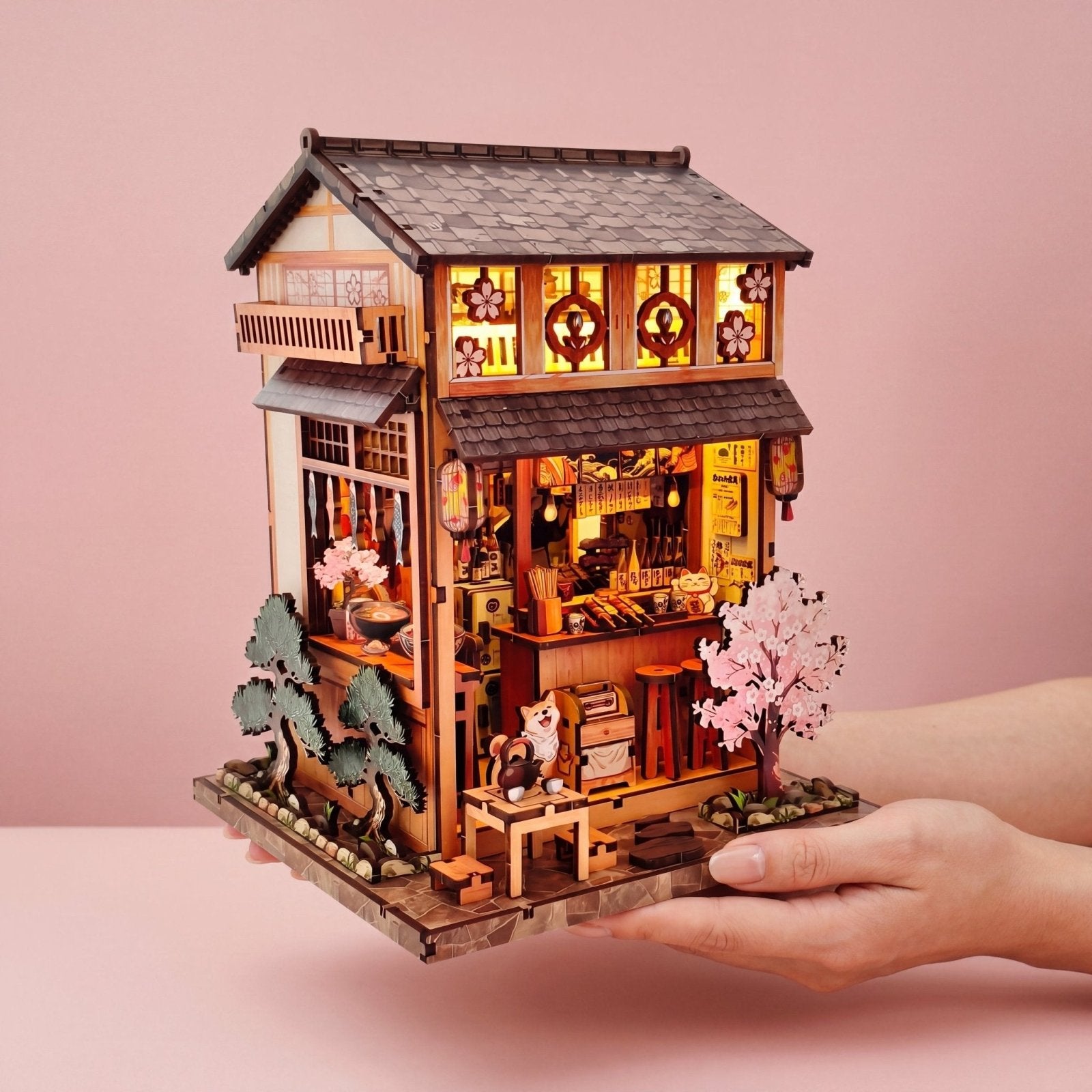


A yokocho is a side alley; in Tokyo’s dining districts, the word also brings to mind compact bars and eateries gathered along a narrow lane. Yakitori Grill House shares that intimate food-and-lantern atmosphere, turning a small eatery scene into a project you can build and display.
Soothee sells the kits discussed here. Product specifications are seller-listed; cultural parallels are editorial interpretations where applicable.
What makes a yokocho memorable?
Tokyo tourism’s Omoide Yokocho guide describes a Shinjuku alley with small food stalls and yakitori. The appeal is human scale: close-set counters, small entrances, and places that reward looking beyond the main street. It is a useful real-world reference for understanding this miniature’s mood.
The kit is not presented here as a measured reconstruction of that neighborhood. Instead, its tiny food display, bottles, wooden-looking frontage, and illuminated window invite the same kind of close attention.

Why do food-centered stories feel intimate?
In Midnight Diner: Tokyo Stories, a small restaurant provides a setting for customers’ lives to intersect. That premise is supported by Netflix’s Midnight Diner: Tokyo Stories synopsis. Viewers who gravitate toward quiet conversations over food may find a similar atmosphere in a miniature eatery.
The connection is emotional, not official. This kit does not recreate the program’s restaurant or characters. Its own details leave room to imagine a familiar order, an after-work visit, or a shared meal at the end of a long day.

Which details tell this kit’s story?
Start with the skewers lined up at the counter. They establish the scene as somewhere food is being prepared, rather than a generic Japanese facade. Bottles and small containers make the counter feel occupied; the upper window adds another layer of depth.
The close-ups are particularly useful if food miniatures are your main interest. Compare the visible details with what you enjoy making: an architectural shell alone offers a different experience from arranging the objects that make a tiny business feel active.
How can the scene mark a real occasion?
A remembered Japan trip, a planned food outing, or a regular dinner with a friend can provide a personal reason to build it. A short handwritten memory can make the finished display meaningful without turning it into branded television merchandise.
Before choosing Yakitori Grill House, check the practical commitment: the listing says 220 pieces and about 3–5 hours. Glue and two AAA batteries are not included. See the build preparation guide or DIY book nook kit gifting comparison next.
Sources and product information
- Specifications: Yakitori Grill House product listing; checked September 21, 2026. Assembly times are seller estimates, not timed tests.
Product-detail images are from Soothee’s supplied product assets. They illustrate the scene and are not assembly instructions.

